Key Takeaways
Residential turf installation Inland Empire CA homeowners can rely on follows a clear sequence—demo, grading and drainage corrections, base build and compaction, then layout, seaming, infill, and grooming—to create a surface that drains efficiently, feels stable underfoot, and looks natural. In Inland Empire conditions, long-term results depend more on site preparation, drainage planning, and seam/edge execution than product marketing, and severe drainage issues or heavy shade may require extra planning.
- Installation quality starts below the turf: Demolition, correct grading, and a properly compacted, smoothly screeded base help prevent ripples, unevenness, and poor drainage that can show up later in clay-heavy soils or after heavy rain and rinsing.
- Drainage should be designed, not assumed: Contractors should evaluate runoff routes, low spots, and negative grade, then use regrading and—only when needed—solutions like French drains, area drains, or channel drains to prevent pooling and related odor or performance issues.
- Compare bids by scope, seams, and detailing: Instead of focusing only on price per square foot, confirm what’s included for demo/disposal, base specifications and compaction method, seam locations and grain direction, edge restraint and transitions, plus infill application and power brooming for a natural finish.
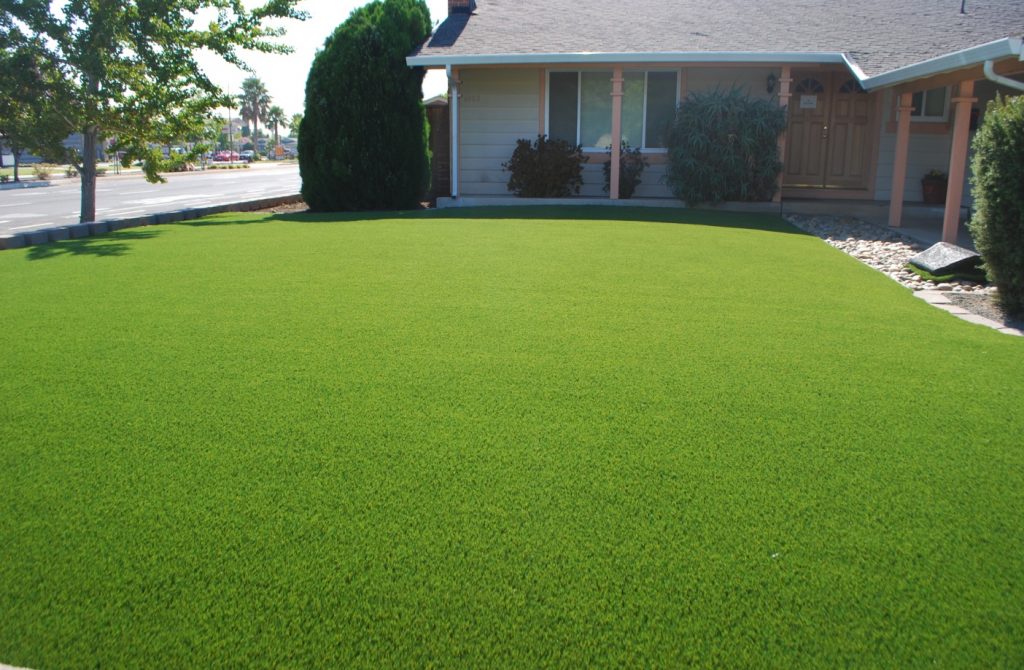
Residential turf installation Inland Empire CA typically involves removing existing lawn, correcting drainage and grading, installing a compacted base, and securing synthetic turf with proper seaming and infill so it drains and wears like real grass.
In the Inland Empire’s hot summers and periodic water-use restrictions, many homeowners choose turf to reduce irrigation demand and avoid patchy lawns caused by heat stress. A quality installation hinges on site preparation: soil compaction, weed barrier placement, edge restraints, and drain solutions for yards with clay-heavy soils or low spots that can hold water.
This guide breaks down typical cost drivers, what the installation process should look like from demo to final grooming, and how to compare contractors—licenses, insurance, base specifications, seam layout, and warranties—so the finished yard looks natural and performs well over time.
What to Expect From Residential Turf Installation in the Inland Empire
A proper residential turf installation Inland Empire CA homeowners can rely on follows a predictable sequence: demolition, grading and drainage corrections, base construction and compaction, turf layout and seaming, then infill and grooming. The goal is a surface that drains efficiently, feels stable underfoot, and looks natural from every viewing angle.
Because Inland Empire yards often include clay-heavy soils, mild slopes, and heat-reflective hardscape, installation quality matters more than product marketing. Small shortcuts—like inadequate compaction or rushed seam work—can show up later as ripples, unevenness, or poor drainage after a hose-down or summer monsoon storm.
- Front yards typically prioritize realism, crisp edging, and clean transitions against sidewalks and driveways.
- Backyards often need extra attention to drainage, pet use, and high-traffic pathways.
- Side yards and narrow runs require careful seam planning so the grain direction stays consistent and “stripe” patterns don’t look mismatched.
Site Evaluation: Grading, Drainage, and Soil Conditions
The evaluation stage identifies where water will move, where it currently pools, and which areas need regrading before any base is installed. In the Inland Empire, the biggest performance issues usually trace back to drainage or compaction—not the turf itself.
A contractor should look at runoff routes from roofs, patios, and neighboring lots, plus any low spots where water lingers. If your yard has expansive clay soils, water may infiltrate slowly, making base design and drainage details more important.
Common Inland Empire drainage challenges
Many properties combine hardscape runoff with tight side yards and compacted native soil, which can concentrate water in a few areas. Good installers plan for predictable drainage rather than hoping permeable backing alone will solve it.
- Low spots near patios where water sheets off concrete and collects at the lawn edge.
- Clay soil that holds water longer after irrigation, rain, or pet wash-downs.
- Negative grade toward the house that can push water toward foundations if not corrected.
- Tree root zones that create localized bumps and future movement if roots expand.
Drain options that may be used (when needed)
Drainage solutions vary by yard layout and existing infrastructure; there isn’t one “always correct” system. A good plan avoids overbuilding while still preventing ponding and odor issues.
- Regrading to establish consistent slope away from structures and toward approved discharge areas.
- French drains (perforated pipe and gravel) to collect subsurface water in problem zones.
- Area drains for surface collection where runoff naturally converges.
- Perimeter/channel drains at the edge of patios or pool decks to intercept sheet flow.
Step-by-Step Installation Process (Demo to Final Grooming)
The installation process should be transparent, with each layer serving a purpose: stability, drainage, weed resistance, and a finished look. If any layer is skipped or rushed, it can affect how the turf drains and wears.
1) Demolition and haul-away
Old sod, weeds, and debris must be removed so the base sits on a consistent, compactable subgrade. Skipping thorough demo can leave organic material that decomposes and creates voids.
- Remove existing grass, roots, and loose soil until a firm, consistent subgrade is reached.
- Identify sprinkler heads/valves to cap, reroute, or convert (many homeowners keep drip lines for planters).
- Dispose of green waste and soil per local requirements (your contractor should specify what’s included).
2) Rough grading and subgrade compaction
Before base goes in, the subgrade is shaped and compacted to reduce future settling. This is where slopes are corrected and low spots are eliminated.
- Establish target finish grade, considering door thresholds, patio edges, and walkway elevations.
- Compact subgrade in a controlled way (overcompaction can create water-shedding; undercompaction can settle).
- Verify slope direction so drainage doesn’t fight the yard’s natural flow.
3) Base installation and compaction (the foundation of performance)
The base provides a stable, drainable layer that supports foot traffic and helps turf lay flat. Base thickness and material choice should match site conditions, traffic, and drainage needs.
- Material selection: often a compactable aggregate base is used to balance drainage and stability.
- Lift compaction: base is typically compacted in layers rather than dumped and pressed once.
- Final grading: the base is screeded smooth so the turf doesn’t telegraph bumps.
If your yard has frequent pet use or occasional heavy furniture, a more robust base and careful compaction help prevent impressions and unevenness over time.
4) Weed barrier (where it helps—and where it doesn’t)
Weed barriers can reduce weed intrusion from below, but they’re not magic; windblown seeds can still germinate in debris on top of turf. The barrier should be installed flat and secured so it doesn’t wrinkle.
- Overlap seams to reduce gaps where weeds can push through.
- Secure fabric so it doesn’t shift during turf stretching and nailing.
- Discuss whether barrier is appropriate around trees, where water and air exchange may matter.
5) Turf layout, cutting, and seam planning
Layout determines realism: grain direction, seam locations, and how patterns line up across the yard. Seams are easiest to hide when planned around sightlines and traffic flow.
- Grain direction: keeping consistent grain reduces visible color changes between sections.
- Seam placement: avoid seams in the center of high-visibility areas when possible.
- Minimize waste: good planning reduces offcuts while still prioritizing appearance.
6) Seaming, securing, and edge restraint
Edges and seams keep turf tight over time, especially during hot weather when materials expand. Secure edging also prevents lifting and keeps infill where it belongs.
- Seam tape and adhesive: used to bond turf sections; cure time and cleanliness matter.
- Fasteners: nails/spikes placed at intervals (and away from seams) to prevent puckering.
- Edge restraint: bender board, concrete mow strips, or existing hardscape edges can help maintain a crisp line.
7) Infill, power brooming, and final grooming
Infill adds ballast, supports fibers, and affects feel underfoot; grooming lifts blades for a more natural look. Infill type and amount should match the turf product and your household use.
- Apply infill in multiple light passes rather than one heavy dump.
- Power broom/brush to stand fibers up and work infill down evenly.
- Verify drainage by lightly hosing and checking for unexpected pooling.
Key Installation Choices That Affect Cost and Long-Term Results
Most cost differences come from what you don’t see: demolition scope, base construction, drainage work, and detailing around edges. Comparing quotes is easier when each contractor clearly lists their base plan, seam approach, and what’s included/excluded.
Main cost drivers homeowners should compare
Instead of focusing only on price per square foot, compare the work scope line-by-line. A lower bid can be reasonable—or it can omit steps that prevent future repairs.
- Demolition and disposal: depth of removal and haul-away can vary widely.
- Base thickness and compaction method: layered compaction and finish grading take time and equipment.
- Drainage additions: French drains, area drains, or regrading add labor and materials.
- Access constraints: narrow side yards can require hand work rather than machine grading.
- Detailing: curved cuts, steps, planters, and tight corners increase labor.
Material considerations without marketing hype
Turf products vary by face weight, pile height, density, and backing design, but the “best” option depends on your use. Ask for samples you can view outdoors in sun and shade, because color and sheen can look different at noon versus late afternoon.
- Realism: multi-tone blades and thatch can reduce “green carpet” appearance.
- Heat: any synthetic surface can warm in direct sun; shade planning and light rinsing can help.
- Drainage: turf backing hole pattern matters, but base design usually determines real-world performance.
- Pets: choose products and infill approaches that support rinsing and odor management.
| Installation Element | What to Confirm in the Quote | Inland Empire Considerations |
|---|---|---|
| Base build | Base material type, approximate thickness range, compaction approach, and whether final screed/finish grading is included | Clay-heavy soils and high heat make settlement and expansion more noticeable, so stable compaction and smooth finish matter |
| Drainage plan | Whether regrading is included, plus any drains (type, location, and discharge routing) | Monsoon-style storms can expose low spots; confirm how runoff is managed near patios, side yards, and fences |
| Seaming | Seam locations, seam tape/adhesive method, and whether grain direction will match across sections | Heat can expand materials; well-planned seams and secure edges help prevent peaking and visible lines |
| Edges and transitions | Type of edge restraint, fastener spacing method, and how turf meets concrete, pavers, and planters | Hardscape-heavy yards reflect heat and can highlight uneven edges; clean transitions improve realism |
| Infill and grooming | Infill type, approximate application method (multi-pass), and brushing/power broom finish | For pet yards and dusty conditions, ask how infill choice affects rinsing, tracking, and ongoing upkeep |
Choosing the Right Contractor: What to Ask and What to Watch For
The best contractor comparisons are based on process and documentation, not just product samples. You want clear scope, proof of insurance/licensing, and a plan for seams, drainage, and edges.
Bid review checklist
Request a written scope that’s detailed enough to compare apples-to-apples. If something isn’t written down, it may not be included.
- What exactly is being removed, and how deep is demo expected to go?
- What is the base material and how will it be compacted?
- How will slopes be set, and where will water drain?
- Where will seams land, and will grain direction be consistent?
- What edging method will be used along fences, planters, and concrete?
- What warranty is provided for workmanship versus turf material (and what voids it)?
Red flags that can lead to repairs later
Certain shortcuts commonly cause rippling, visible seams, and drainage problems. If you hear vague answers, ask for specifics in writing.
- “We don’t need much base” without inspecting soil or drainage.
- No plan for low spots, downspout discharge, or patio runoff.
- Seams placed in prominent sightlines without an explanation.
- No mention of grooming/power brooming after infill.
- Unclear disposal terms or surprise haul-away charges.
Popular Residential Use Cases (Front Yards, Backyards, Pets, and Putting Areas)
Residential turf can be tailored to how you live—curb appeal, play space, pet runs, or short-game practice—but each use case benefits from slightly different planning. Matching product and installation details to the application helps the turf look better and last longer.
Front yard turf for curb appeal
Front yards usually demand the most realism and the cleanest edges. The simplest way to improve appearance is to prioritize seam minimization and consistent grain direction facing the main viewing angle (often from the street).
- Use crisp borders against walkways and driveway edges.
- Plan sprinkler conversions so nearby shrubs still get water (often via drip irrigation).
- Avoid unnecessary seams in open, flat areas where the sun highlights them.
Backyard turf for entertaining and play
Backyards see more foot traffic, furniture movement, and occasional spills, so base stability and drainage matter. If you host often, consider traffic lanes where people naturally walk from doors to seating areas.
- Reinforce high-traffic paths with meticulous base compaction.
- Plan for hose access for occasional rinsing, especially in hot months.
- Keep transitions flush to reduce trip edges near patios and steps.
Pet-friendly turf planning
Pet areas benefit from a drainage-first approach and a realistic plan for rinsing and waste cleanup. If pets will use the lawn daily, ask about turf and infill choices that support faster cleaning and less odor retention.
For practical cleaning routines, see tips to remove pet waste from artificial grass in the Inland Empire.
If you know pets are a primary use case, consider dedicated pet turf options designed around drainage and cleanability.
Maintenance After Installation: Keeping Turf Looking Natural in Inland Empire Heat
Artificial turf is lower-maintenance than natural grass, but it isn’t zero-maintenance. Routine brushing, debris removal, and occasional rinsing help prevent matting, discoloration from dust, and uneven wear.
Simple maintenance rhythm for most homes
A few repeatable habits keep the surface consistent and comfortable. Your exact schedule depends on trees, pets, and how much dust or debris your yard collects.
- Remove debris: blow or rake leaves so organic matter doesn’t break down into the turf.
- Brush against the grain: periodically lift fibers in traffic zones to reduce matting.
- Rinse as needed: light rinsing can help with dust and pet areas, especially in hot, dry periods.
- Spot clean spills: address food, grease, and sticky messes before they attract dirt.
If you prefer to outsource upkeep, professional turf maintenance can help with brushing, infill leveling, and seasonal cleaning.
How to Decide If Turf Is Right for Your Yard
The best way to choose turf is to match it to your priorities: water reduction, consistent appearance, kid/pet use, or replacing a lawn that struggles in summer heat. A realistic plan considers both benefits and limitations so expectations stay aligned after installation.
- Good fit if: you want a consistently green yard, reduced irrigation demand, and less weekly mowing/edging.
- May require extra planning if: your yard has severe drainage issues, heavy shade with poor drying, or large trees with aggressive roots.
- Ask for clarity on: drainage corrections, base build details, seam plan, and what maintenance is recommended for your household.
Artificial turf is a manufactured landscape surface with real design and performance variables—learning the basics helps you evaluate bids confidently. For a deeper overview of what artificial turf is and how it differs from natural grass, see artificial turf.
Frequently Asked Questions
Ready for a Turf Installation Plan That Fits Your Yard?
If you’re considering synthetic grass for a front yard refresh, a durable backyard play space, or a cleaner pet area, the fastest way to avoid ripples, visible seams, and drainage headaches is to start with a clear plan. A walkthrough can help confirm grading needs, seam placement, edge transitions, and how water will move during heavy rain or routine rinsing.
SoCal Artificial Grass and Putting Greens can help you compare product options and installation details so you know what’s included before work begins—and what to ask any contractor about base prep, disposal, and workmanship expectations.